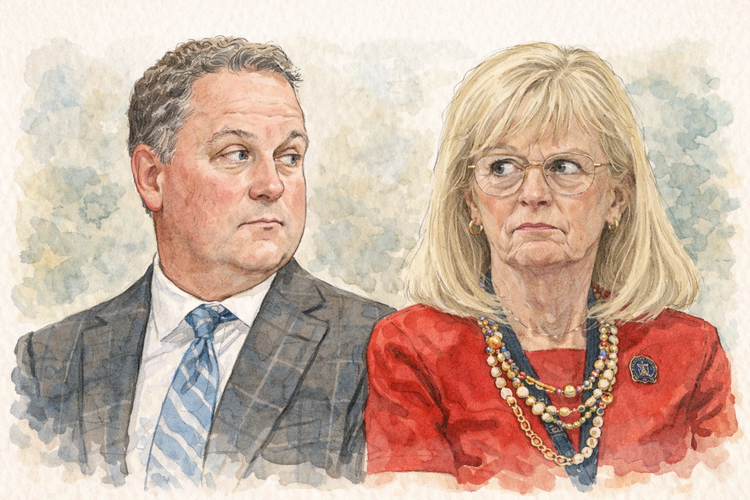
The Denali Debacle
In the beginning...
How the power of one man allowed him to kill a bipartisan effort
State Rep. Mitch Gore (D–House District 89) on Indianapolis’s northeast side introduced a bill this session that, at least on paper, seemed likely to attract rare bipartisan agreement.
(If you don’t know your legislators, you can find them here.)
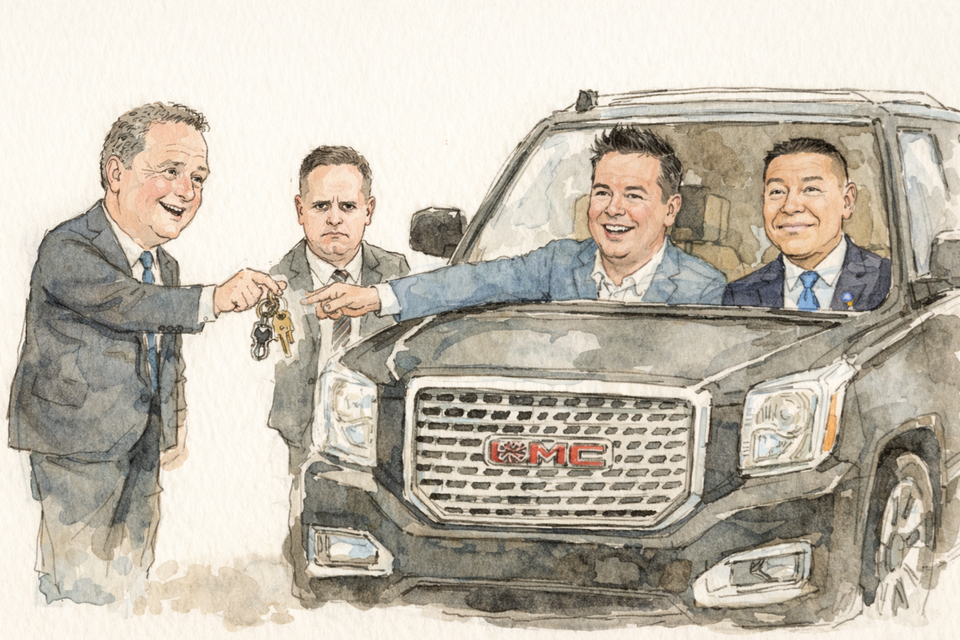
The proposal was straightforward: prohibit statewide elected officials from using taxpayer dollars to purchase luxury vehicles.
Gore said the idea came after learning the price of several recently purchased state vehicles — including SUVs used by:
• Secretary of State Diego Morales — [$DOLLAR AMOUNT]
• Lieutenant Governor Micah Beckwith — [$DOLLAR AMOUNT]
• Attorney General Todd Rokita’s office — [$DOLLAR AMOUNT]
• Governor Mike Braun — [$DOLLAR AMOUNT]
The price tags raised eyebrows among lawmakers on both sides of the aisle.
To Gore, the issue wasn’t partisan. It was about optics — and stewardship of public money.
“If taxpayers are footing the bill,” he argued, “they shouldn’t be buying luxury SUVs for politicians.”
So What Happened?
Like all House bills, the proposal first moved through the standard legislative process.
After being introduced, it was assigned to a House committee, where lawmakers heard testimony from supporters who argued the measure was a matter of fiscal responsibility and public trust. Several legislators from both parties expressed support for the idea that taxpayer funds should not be used to purchase high-end vehicles for elected officials.
When the committee voted, the bill passed with bipartisan support, clearing its first legislative hurdle.
Under normal circumstances, the next step would be consideration by the full House.
But that never happened.
The bill never reached the House floor for a vote.
In the Indiana House, the decision about which bills move forward ultimately rests with House Speaker Todd Huston (R–House District 37), the chamber’s top Republican and the person who controls the legislative calendar.
And in this case, the proposal simply stopped moving.
Without being scheduled for a floor vote before legislative deadlines, the bill quietly died.
And the scuttlebutt?
In the weeks leading up to the bill’s introduction, Rep. Mitch Gore had already been drawing public attention to the issue on social media. He dubbed the lineup the “Grifter Auto Lot,” and wanted the statehouse parking lot to show taxpayers the reality of their dollars.
Gore, is not only a Democrat, he is also one of the younger members of the Indiana House. Naturally, he has much more of an online presence. The posts generated significant online engagement and drew attention to the price tags of vehicles used by several statewide offices, including those tied to Secretary of State Diego Morales, Lieutenant Governor Micah Beckwith, and gubernatorial candidate Mike Braun.
An Indianapolis opinion column recently suggested the decision may have been influenced by the attention surrounding the issue. Rep. Gore’s viral videos and public pressure campaign had turned what might otherwise have been a routine reform bill into a high-profile political moment.
Huston’s office has not publicly addressed that claim.
And the Scuttlebutt?
In the weeks leading up to the bill’s introduction, Rep. Mitch Gore had already been drawing public attention to the issue online.
Walking through the Statehouse parking lot in a series of social media videos, Gore pointed to the SUVs purchased with taxpayer funds and dubbed the lineup the “Grifter Auto Lot.” His goal, he said, was simple: show taxpayers how their money was being spent.
Gore is not only a Democrat — he is also one of the younger members of the Indiana House, and far more active on social media than many of his colleagues. The videos quickly generated significant engagement and helped amplify the price tags attached to vehicles used by several statewide offices, including those tied to Secretary of State Diego Morales, Lieutenant Governor Micah Beckwith, and Governor Mike Braun.
That public attention may have complicated what otherwise might have been a relatively quiet reform bill.
An Indianapolis opinion column later suggested the proposal’s demise may have been influenced by the spotlight surrounding it. Gore’s viral videos and public pressure campaign had turned what might otherwise have been a routine piece of legislation into a high-profile political moment.
Huston’s office has not publicly addressed that claim.
Still, the episode raises a broader question about how power works inside the Indiana House.
The Power of One Man
In practice, a great deal of authority rests with the Speaker.
Some lawmakers — both privately and publicly — have described Speaker Todd Huston’s leadership style as highly centralized.
As Speaker, he plays a major role in:
• determining committee assignments
• shaping legislative priorities
• managing the House Republican caucus agenda
• deciding which bills reach the House floor
Supporters say this approach creates discipline and legislative efficiency in a chamber with hundreds of bills each session.
Critics argue it can also limit debate or discourage rank-and-file members from advancing legislation that diverges from leadership priorities.
And because many bills can die quietly without a recorded vote, the Speaker’s influence over the legislative calendar can determine which proposals receive public debate — and which simply disappear.
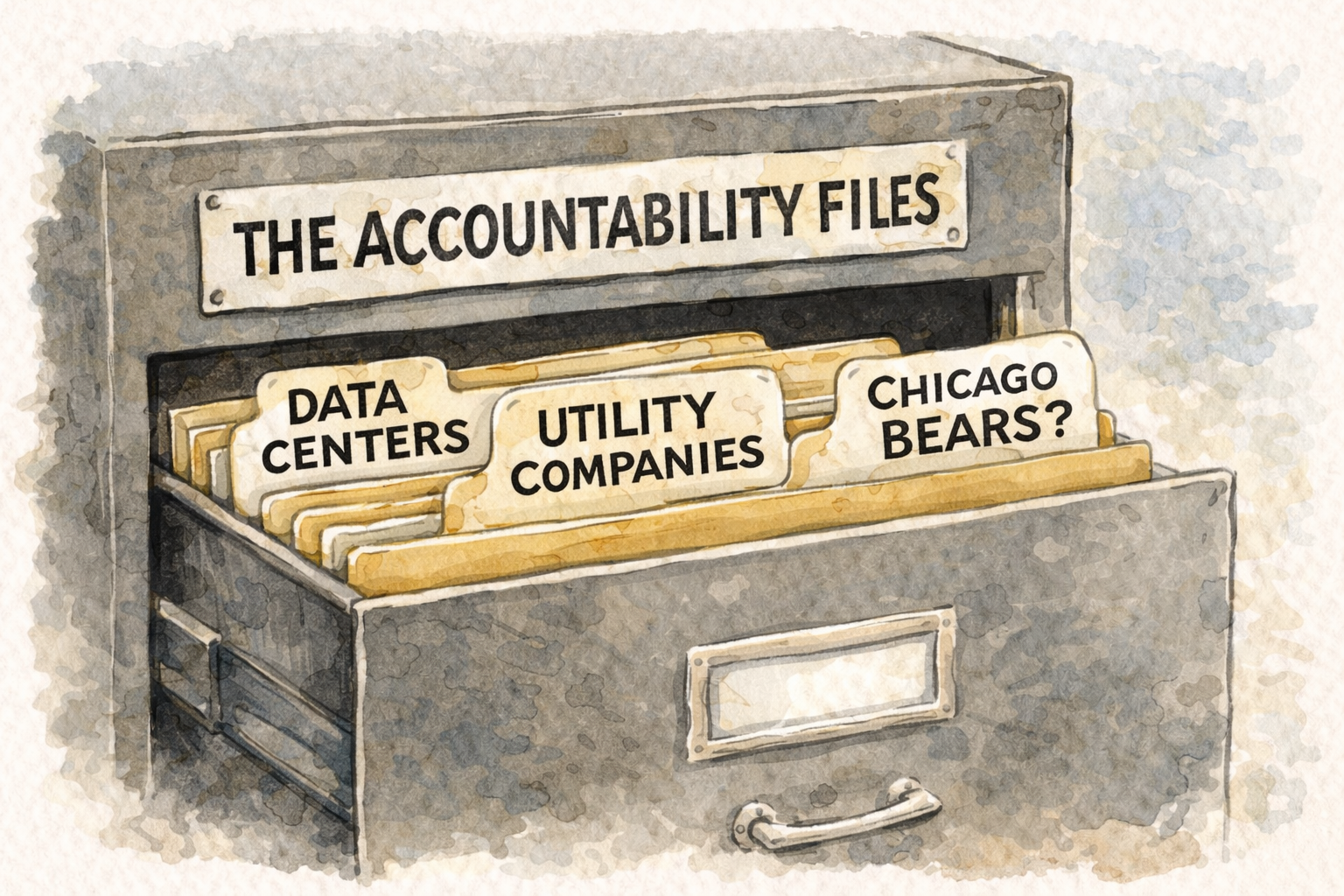
The Accountability Files
Probing into the Pattern's of Rep. Huston
Diving into what Rep. Huston did this legislative session
As taxpayers, we are effectively the employers of our elected officials. And like any workplace, the more authority a position holds, the greater the scrutiny it deserves.
In the Indiana House, few roles carry more influence than that of the Speaker.
That makes the decisions of House Speaker Todd Huston (R–District 37) worth examining — not only in the case of a single bill, but across his broader legislative record.
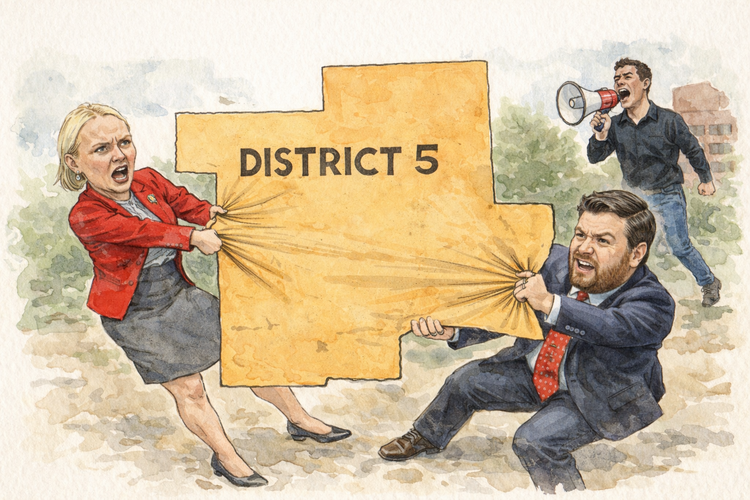
The December 2025 Redistricting Push
One recent example came during the special legislative session in December 2025, when House leadership attempted to advance controversial redistricting changes.
Under Speaker Huston, the House moved quickly to pass the proposal, dedicating roughly two weeks of legislative time to the effort.
Critics argued the changes were unnecessary and lacked public support, noting that constituents had not widely demanded a mid-decade redraw of district maps. The proposal also drew national attention after reports that the effort followed pressure from former President Donald Trump.
Despite passing the House with little resistance from the Republican supermajority, the plan ultimately failed in the Senate, where Senate leadership had already indicated it would not move forward.
The result: two weeks of legislative time consumed by a proposal that never became law — leaving lawmakers with the same number of bills to consider but significantly less time to debate them.
Redistricting debates in Indiana frequently revolve around three central concerns:
• the competitiveness of legislative districts
• potential partisan advantages built into the maps
• the transparency of the map-drawing process
The December session revived each of those debates.
Huston’s Policy Focus: Education
While leadership power shapes the legislative process, Huston’s personal policy focus has been most visible in education.
During his tenure in House leadership, Indiana lawmakers have:
• expanded the Choice Scholarship voucher program
• approved universal eligibility for vouchers, allowing more families to use public funds for private education
• increased support for charter schools
• modified teacher licensing and certification rules
Supporters argue these changes expand educational opportunity and give parents greater flexibility in choosing schools.
Critics contend the policies divert funding away from traditional public schools and accelerate the privatization of education.
Huston has also overseen passage of Indiana’s biennial state budgets — totaling roughly $44 to $46 billion — which included:
• billions in K-12 education funding
• increased investments in teacher pay
• adjustments to school funding formulas
Debate continues over whether those increases have offset the financial impact of expanding school choice programs.
The 2026 House Agenda
The legislative agenda announced by House Republicans in 2026 under Huston’s leadership focused heavily on economic policy issues, including:
• reducing regulatory barriers for businesses
• housing affordability initiatives
• energy and utility reforms
Supporters describe these efforts as aimed at improving economic growth and lowering costs for Hoosier families.
Questions About Outside Connections
Like many long-serving political leaders, Huston has also faced scrutiny over potential conflicts of interest.
Two episodes drew particular attention.
The College Board Role
In 2022, Huston served simultaneously as:
• Speaker of the Indiana House
• Senior Vice President at the College Board, the nonprofit organization that administers the SAT and Advanced Placement exams.
Because the legislature frequently debates education policy affecting standardized testing, critics raised questions about the dual roles.
Huston ultimately resigned from the College Board position following public criticism.
Virtual School Funding Debate
Another controversy emerged during debate over funding for virtual charter schools.
At the time, Huston had worked as a consultant for Stride Inc., a company involved in online education.
Some critics argued that proposed funding changes could benefit virtual education providers. Huston denied any conflict of interest and maintained the policy was intended to expand educational options for families.
The Larger Question
None of these episodes alone define a legislative career.
But together they illustrate the considerable influence concentrated in the Speaker’s office — influence that can shape not only what policies pass, but which ideas are allowed to reach the public debate in the first place.
And that brings the story back to the bill that started this conversation: a bipartisan proposal to restrict taxpayer-funded luxury vehicles that passed committee, attracted public attention — and then quietly disappeared.
The Greater Implications
In the Indiana legislature, a bill does not necessarily fail because lawmakers vote against it.
Often, it simply never receives a vote at all.
Every session, dozens of proposals pass committee but ultimately die because they are never scheduled for debate on the House floor, fail to be placed on the calendar before deadlines, or run out of time in the legislative schedule.
Because leadership controls the legislative calendar, those decisions can quietly determine which ideas reach public debate — and which disappear without a recorded vote.
In practical terms, that means legislation can fail for reasons that have little to do with the bill’s popularity among lawmakers.
Below are several examples of bills that died this session after clearing early hurdles but never reaching final consideration.
Bills That Died Without a Floor Vote
• [Bill Name / Number] – Passed committee but was never placed on the House calendar.
• [Bill Name / Number] – Missed the scheduling deadline after committee approval.
• [Bill Name / Number] – Awaited floor action but was never called for debate.
• [Bill Name / Number] – Advanced early but ran out of time before legislative deadlines.
• [Bill Name / Number] – Cleared initial steps but was never scheduled for second reading.
In each case, the absence of a floor vote means there is no public record showing where individual lawmakers stood on the proposal.
For advocates, critics, and voters alike, that can make it difficult to determine whether legislation failed because lawmakers opposed it — or because it was never given the opportunity to be debated.